








<?xml version="1.0" encoding="UTF-8"?>
<?xml-stylesheet href="http://feeds.theheart.org/~d/styles/rss2full.xsl" type="text/xsl" media="screen"?><?xml-stylesheet href="http://feeds.theheart.org/~d/styles/itemcontent.css" type="text/css" media="screen"?><rss xmlns:atom="http://www.w3.org/2005/Atom" xmlns:feedburner="http://rssnamespace.org/feedburner/ext/1.0" version="2.0">
<channel>

<title>theHeart.org - Acute Coronary Syndrome</title>
<link>http://test.theheart.org/condition/acute-coronary-syndrome.do</link>
<description />
<image>
 <url>http://www.theheart.org/skin/images/maintho_logo.png</url>
 <title>theHeart.org- Acute Coronary Syndrome</title>
 <link>http://test.theheart.org/condition/acute-coronary-syndrome.do</link>
</image>


    <atom10:link xmlns:atom10="http://www.w3.org/2005/Atom" rel="self" href="http://feeds.theheart.org/acute-coronary-syndrome" type="application/rss+xml" /><item>
    <link>http://feeds.theheart.org/~r/acute-coronary-syndrome/~3/457527333/921925.do</link>
    <title>ACC/AHA publishes new performance measures for STEMI patients</title>
    <description>Differing from guidelines, the new performance measures identify aspects of care with evidence so strong, such as prescribing a statin upon discharge or delivering reperfusion in a timely manner, that every patient should be receiving the same treatment. In other words, "If you're not doing things a certain way, then you're not providing the best care," says one expert. (Masoudi FA et al. &lt;i&gt;J Am Coll Cardio&lt;/i&gt;&lt;i&gt;l&lt;/i&gt;, &lt;i&gt;Circulation&lt;/i&gt;; published online before print November 10, 2008.)&lt;img src="http://feeds.theheart.org/~r/acute-coronary-syndrome/~4/457527333" height="1" width="1"/&gt;</description>
    <pubDate>
    Tue, 18 Nov 2008 13:30:16 EST
    </pubDate>
    <guid isPermaLink="false">http://test.theheart.org/article/921925.do</guid>
    <feedburner:origLink>http://test.theheart.org/article/921925.do</feedburner:origLink></item>

    <item>
    <link>http://feeds.theheart.org/~r/acute-coronary-syndrome/~3/457462183/921855.do</link>
    <title>ECGs add little when it comes to prognosis in those with chest pain </title>
    <description>ECGs or exercise ECGs have little incremental value over and above clinical assessment for prognosis in patients with suspected angina, a new study has found. Hence, such tests should not be used to rule out future events in these patients, researchers say. (Sekhri N et al. &lt;i&gt;BMJ&lt;/i&gt;; published online before print November 13, 2008.)&lt;img src="http://feeds.theheart.org/~r/acute-coronary-syndrome/~4/457462183" height="1" width="1"/&gt;</description>
    <pubDate>
    Tue, 18 Nov 2008 12:45:28 EST
    </pubDate>
    <guid isPermaLink="false">http://test.theheart.org/article/921855.do</guid>
    <feedburner:origLink>http://test.theheart.org/article/921855.do</feedburner:origLink></item>

    <item>
    <link>http://feeds.theheart.org/~r/acute-coronary-syndrome/~3/457400522/921781.do</link>
    <title>OCT imaging suggests low rates of uncovered/malapposed struts following DES for AMI</title>
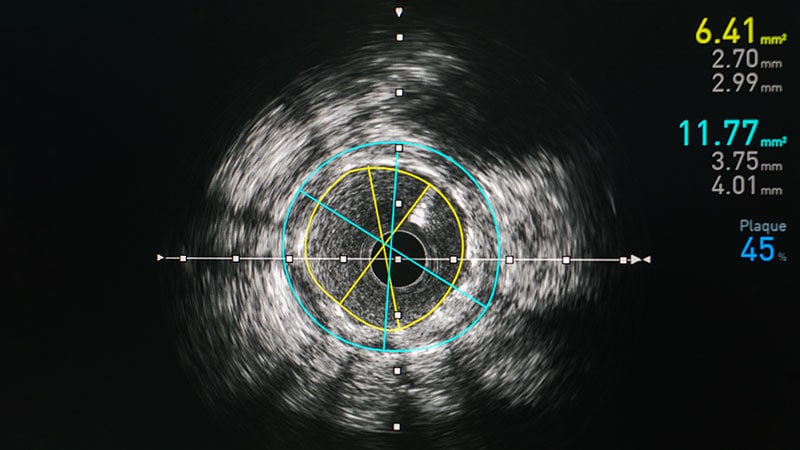
    <description>An OCT study conducted in a subset of HORIZONS-AMI patients suggests that exposed and malapposed stent struts in the setting of AMI are more common with drug-eluting stents than with bare-metal stents but still relatively rare. (American Heart Association 2008 Scientific Sessions.)&lt;img src="http://feeds.theheart.org/~r/acute-coronary-syndrome/~4/457400522" height="1" width="1"/&gt;</description>
    <pubDate>
    Tue, 18 Nov 2008 11:30:36 EST
    </pubDate>
    <guid isPermaLink="false">http://test.theheart.org/article/921781.do</guid>
    <feedburner:origLink>http://test.theheart.org/article/921781.do</feedburner:origLink></item>

    <item>
    <link>http://feeds.theheart.org/~r/acute-coronary-syndrome/~3/453424521/921369.do</link>
    <title>Cardiovascular effects of air pollution, even in the comfort of home </title>
    <description>Researchers who fitted study subjects with "air-pollution vests" to continuously monitor exposure to both indoor and outdoor air pollutants say that people are probably exposed to much higher levels of pollutants than community monitoring stations typically indicate and that this exposure affects both endothelial function and systolic blood pressure. (American Heart Association 2008 Scientific Sessions.)&lt;img src="http://feeds.theheart.org/~r/acute-coronary-syndrome/~4/453424521" height="1" width="1"/&gt;</description>
    <pubDate>
    Fri, 14 Nov 2008 16:45:06 EST
    </pubDate>
    <guid isPermaLink="false">http://test.theheart.org/article/921369.do</guid>
    <feedburner:origLink>http://test.theheart.org/article/921369.do</feedburner:origLink></item>

    <item>
    <link>http://feeds.theheart.org/~r/acute-coronary-syndrome/~3/452069547/921079.do</link>
    <title>THINRS: Home INR monitoring as effective as clinic-based care</title>
    <description>A randomized comparison shows weekly home monitoring is safe but did not reduce stroke, major bleeds, or death vs monthly clinic INR testing, as had been suggested by previous studies. (American Heart Association 2008 Scientific Sessions.)&lt;img src="http://feeds.theheart.org/~r/acute-coronary-syndrome/~4/452069547" height="1" width="1"/&gt;</description>
    <pubDate>
    Thu, 13 Nov 2008 13:30:16 EST
    </pubDate>
    <guid isPermaLink="false">http://test.theheart.org/article/921079.do</guid>
    <feedburner:origLink>http://test.theheart.org/article/921079.do</feedburner:origLink></item>

    <item>
    <link>http://feeds.theheart.org/~r/acute-coronary-syndrome/~3/449598796/919161.do</link>
    <title>TIMACS: Early invasive management safe in non-ST-elevation ACS, improves outcomes in high-risk cases  </title>
    <description>The findings appear to mandate early intervention in high-risk cases and to support the use of either an early or delayed strategy for patients considered at low to intermediate risk. (American Heart Association 2008 Scientific Sessions.)&lt;img src="http://feeds.theheart.org/~r/acute-coronary-syndrome/~4/449598796" height="1" width="1"/&gt;</description>
    <pubDate>
    Tue, 11 Nov 2008 09:00:04 EST
    </pubDate>
    <guid isPermaLink="false">http://test.theheart.org/article/919161.do</guid>
    <feedburner:origLink>http://test.theheart.org/article/919161.do</feedburner:origLink></item>

    <item>
    <link>http://feeds.theheart.org/~r/acute-coronary-syndrome/~3/448731148/918651.do</link>
    <title>New factor Xa inhibitor rivaroxaban moves into phase 3 for ACS</title>
    <description>A phase 2 trial has demonstrated the feasibility of the novel oral factor Xa inhibitor rivaroxaban in patients with acute coronary syndromes already treated with aspirin and clopidogrel. A phase 3 study with the drug, beginning next month, will reveal whether the benefits outweigh the bleeding risks. (American Heart Association 2008 Scientific Sessions.)&lt;img src="http://feeds.theheart.org/~r/acute-coronary-syndrome/~4/448731148" height="1" width="1"/&gt;</description>
    <pubDate>
    Mon, 10 Nov 2008 14:15:09 EST
    </pubDate>
    <guid isPermaLink="false">http://test.theheart.org/article/918651.do</guid>
    <feedburner:origLink>http://test.theheart.org/article/918651.do</feedburner:origLink></item>

    <item>
    <link>http://feeds.theheart.org/~r/acute-coronary-syndrome/~3/447919998/917661.do</link>
    <title>SEARCH me: Null trial "morphed" into positive meta-analysis</title>
    <description>The SEARCH trial showed no effect on major vascular events with either an intensive 80-mg dose of simvastatin compared with a 20-mg dose or with homocysteine lowering using folic acid and vitamin B&lt;sub&gt;12&lt;/sub&gt;. But the statin data fit with other trials in the field, showing a "clear picture" emerging when it comes to the more-vs-less data on statins, say the UK investigators. (American Heart Association 2008 Scientific Sessions.)&lt;img src="http://feeds.theheart.org/~r/acute-coronary-syndrome/~4/447919998" height="1" width="1"/&gt;</description>
    <pubDate>
    Sun, 09 Nov 2008 20:30:15 EST
    </pubDate>
    <guid isPermaLink="false">http://test.theheart.org/article/917661.do</guid>
    <feedburner:origLink>http://test.theheart.org/article/917661.do</feedburner:origLink></item>

    <item>
    <link>http://feeds.theheart.org/~r/acute-coronary-syndrome/~3/444879386/916757.do</link>
    <title>Eliminating inequalities in CHD: Focus on classic risk factors </title>
    <description>Focusing on the classic risk factors for coronary heart disease and ensuring that best-practice interventions to reduce absolute risk are implemented across the board could largely eliminate socioeconomic differences in CHD deaths, a new British study predicts (Kivimäki M et al. &lt;i&gt;Lancet&lt;/i&gt; 2008; 372:1648-1654.)&lt;img src="http://feeds.theheart.org/~r/acute-coronary-syndrome/~4/444879386" height="1" width="1"/&gt;</description>
    <pubDate>
    Thu, 06 Nov 2008 18:30:00 EST
    </pubDate>
    <guid isPermaLink="false">http://test.theheart.org/article/916757.do</guid>
    <feedburner:origLink>http://test.theheart.org/article/916757.do</feedburner:origLink></item>

    <item>
    <link>http://feeds.theheart.org/~r/acute-coronary-syndrome/~3/444834487/916863.do</link>
    <title>New ranolazine indication in US allows first-line use in angina </title>
    <description>&lt;img src="http://feeds.theheart.org/~r/acute-coronary-syndrome/~4/444834487" height="1" width="1"/&gt;</description>
    <pubDate>
    Thu, 06 Nov 2008 17:45:26 EST
    </pubDate>
    <guid isPermaLink="false">http://test.theheart.org/article/916863.do</guid>
    <feedburner:origLink>http://test.theheart.org/article/916863.do</feedburner:origLink></item>

    <item>
    <link>http://feeds.theheart.org/~r/acute-coronary-syndrome/~3/444791609/916827.do</link>
    <title>Registry: Cardiogenic shock rates plunge over decade thanks to PCI, statins </title>
    <description>The 75% drop in how often ACS patients develop shock during hospitalization accounted for almost all the difference in a Swiss registry study; the ranks of those presenting already in shock didn't change. (Jeger RV et al. &lt;i&gt;Ann Intern Med &lt;/i&gt;2008; 149:618-626.)&lt;img src="http://feeds.theheart.org/~r/acute-coronary-syndrome/~4/444791609" height="1" width="1"/&gt;</description>
    <pubDate>
    Thu, 06 Nov 2008 16:45:15 EST
    </pubDate>
    <guid isPermaLink="false">http://test.theheart.org/article/916827.do</guid>
    <feedburner:origLink>http://test.theheart.org/article/916827.do</feedburner:origLink></item>

    <item>
    <link>http://feeds.theheart.org/~r/acute-coronary-syndrome/~3/442537014/915573.do</link>
    <title>Sudden cardiac death after MI has declined over the decades, but first 30 days and heart failure up risks</title>
    <description>Physicians and patients need to be aware that sudden death is more common during the first few weeks post-MI and that the development of heart failure, at any time, increases the risk of sudden death in MI survivors. (Adabag AS et al. &lt;i&gt;JAMA&lt;/i&gt; 2008; 300:2022-2029.)&lt;img src="http://feeds.theheart.org/~r/acute-coronary-syndrome/~4/442537014" height="1" width="1"/&gt;</description>
    <pubDate>
    Tue, 04 Nov 2008 16:00:00 EST
    </pubDate>
    <guid isPermaLink="false">http://test.theheart.org/article/915573.do</guid>
    <feedburner:origLink>http://test.theheart.org/article/915573.do</feedburner:origLink></item>

    <item>
    <link>http://feeds.theheart.org/~r/acute-coronary-syndrome/~3/442281730/916103.do</link>
    <title>HF up in recent decades as MI deaths fall </title>
    <description>A decline in deaths from MI in recent decades appears to have been accompanied by an increase in the incidence of heart failure, according to a new analysis from the Framingham Heart Study. The likely explanation is that sicker patients, who would have died from MI in earlier years, are now surviving but going on to develop HF, say the researchers. (Velagaleti RS et al. &lt;i&gt;Circulation&lt;/i&gt;; published online before print October 27, 2008.)&lt;img src="http://feeds.theheart.org/~r/acute-coronary-syndrome/~4/442281730" height="1" width="1"/&gt;</description>
    <pubDate>
    Tue, 04 Nov 2008 11:45:04 EST
    </pubDate>
    <guid isPermaLink="false">http://test.theheart.org/article/916103.do</guid>
    <feedburner:origLink>http://test.theheart.org/article/916103.do</feedburner:origLink></item>

    <item>
    <link>http://feeds.theheart.org/~r/acute-coronary-syndrome/~3/437271894/915259.do</link>
    <title>Six-month TRANSFER-AMI data show persistent benefit</title>
    <description>Investigators observed persistent trends toward a reduction in reinfarction and say that the data support the 30-day results that showed a benefit of PCI within six hours of fibrinolytic therapy in STEMI patients. (Canadian Cardiovascular Congress 2008.)&lt;img src="http://feeds.theheart.org/~r/acute-coronary-syndrome/~4/437271894" height="1" width="1"/&gt;</description>
    <pubDate>
    Thu, 30 Oct 2008 15:00:00 EDT
    </pubDate>
    <guid isPermaLink="false">http://test.theheart.org/article/915259.do</guid>
    <feedburner:origLink>http://test.theheart.org/article/915259.do</feedburner:origLink></item>

    <item>
    <link>http://feeds.theheart.org/~r/acute-coronary-syndrome/~3/437198642/915223.do</link>
    <title>Door-to-balloon times of less than 90 minutes possible</title>
    <description>&lt;br/&gt;A new Mayo Clinic protocol resulted in sustainable and durable improvements for four years. (American College of Emergency Physicians Scientific Assembly 2008,)&lt;img src="http://feeds.theheart.org/~r/acute-coronary-syndrome/~4/437198642" height="1" width="1"/&gt;</description>
    <pubDate>
    Thu, 30 Oct 2008 14:30:20 EDT
    </pubDate>
    <guid isPermaLink="false">http://test.theheart.org/article/915223.do</guid>
    <feedburner:origLink>http://test.theheart.org/article/915223.do</feedburner:origLink></item>

    <item>
    <link>http://feeds.theheart.org/~r/acute-coronary-syndrome/~3/436304394/915043.do</link>
    <title>ADD-IFI: Improved exercise tolerance with ivabradine in stable angina patients</title>
    <description>Adding the novel heart-rate-reducing medication to atenolol 50 mg in patients with stable angina improved exercise duration compared with beta-blocker use alone. Ivabradine was also shown to be safe and well tolerated, report investigators. (Canadian Cardiovascular Congress 2008.)&lt;img src="http://feeds.theheart.org/~r/acute-coronary-syndrome/~4/436304394" height="1" width="1"/&gt;</description>
    <pubDate>
    Wed, 29 Oct 2008 17:00:05 EDT
    </pubDate>
    <guid isPermaLink="false">http://test.theheart.org/article/915043.do</guid>
    <feedburner:origLink>http://test.theheart.org/article/915043.do</feedburner:origLink></item>

    <item>
    <link>http://feeds.theheart.org/~r/acute-coronary-syndrome/~3/436304395/914557.do</link>
    <title>MIs linked to daylight saving time may also help explain MI spikes on Mondays </title>
    <description>Rest easy for now: MI rates appear to increase in the spring but dip marginally with the end of DST in autumn, due likely to the extra hour of sleep. (Janszky et al. &lt;i&gt;N Engl J Med &lt;/i&gt;2008; 359:1966-1967.)&lt;img src="http://feeds.theheart.org/~r/acute-coronary-syndrome/~4/436304395" height="1" width="1"/&gt;</description>
    <pubDate>
    Wed, 29 Oct 2008 17:00:00 EDT
    </pubDate>
    <guid isPermaLink="false">http://test.theheart.org/article/914557.do</guid>
    <feedburner:origLink>http://test.theheart.org/article/914557.do</feedburner:origLink></item>

    <item>
    <link>http://feeds.theheart.org/~r/acute-coronary-syndrome/~3/435081502/914761.do</link>
    <title>Beta blockers up risk of MI, death after noncardiac ops </title>
    <description>A new retrospective cohort study has found that those taking beta blockers prior to noncardiac surgery had higher rates of MI and death at 30 days than those not taking beta blockers. The findings are similar to those of the landmark POISE study, says the senior author, although he acknowledges that there are some differences and that the new study has limitations. (Kaafarani HMA et al. &lt;i&gt;Arch Surg&lt;/i&gt; 2008; 143:940-944.)&lt;img src="http://feeds.theheart.org/~r/acute-coronary-syndrome/~4/435081502" height="1" width="1"/&gt;</description>
    <pubDate>
    Tue, 28 Oct 2008 16:00:26 EDT
    </pubDate>
    <guid isPermaLink="false">http://test.theheart.org/article/914761.do</guid>
    <feedburner:origLink>http://test.theheart.org/article/914761.do</feedburner:origLink></item>

    <item>
    <link>http://feeds.theheart.org/~r/acute-coronary-syndrome/~3/434046072/914507.do</link>
    <title>Radial-access PCI reduces major bleeding 73% compared with femoral approach</title>
    <description>In addition to the reduction in major bleeding, there were trends toward a reduction in ischemic events, although these did not reach statistical significance. A second study also showed that radial-access PCI in STEMI patients does not compromise reperfusion times. (Canadian Cardiology Congress 2008.)&lt;img src="http://feeds.theheart.org/~r/acute-coronary-syndrome/~4/434046072" height="1" width="1"/&gt;</description>
    <pubDate>
    Mon, 27 Oct 2008 17:00:00 EDT
    </pubDate>
    <guid isPermaLink="false">http://test.theheart.org/article/914507.do</guid>
    <feedburner:origLink>http://test.theheart.org/article/914507.do</feedburner:origLink></item>

    <item>
    <link>http://feeds.theheart.org/~r/acute-coronary-syndrome/~3/428878178/913561.do</link>
    <title>Reducing heart rate in hypertension is harmfulor is it just atenolol? </title>
    <description>Slowing the heart rate with beta blockers in people with hypertension is associated with an increased risk of cardiovascular events and death, a new systematic review shows. But one expert points out the analysis was done mainly with studies that used atenolol and that it remains to be determined whether it is this drug per se or the reduction in heart rate that is harmful. (Bangalore S et al. &lt;i&gt;J Am Coll Cardiol&lt;/i&gt; 2008; 52:1482-1489.)&lt;img src="http://feeds.theheart.org/~r/acute-coronary-syndrome/~4/428878178" height="1" width="1"/&gt;</description>
    <pubDate>
    Wed, 22 Oct 2008 14:15:39 EDT
    </pubDate>
    <guid isPermaLink="false">http://test.theheart.org/article/913561.do</guid>
    <feedburner:origLink>http://test.theheart.org/article/913561.do</feedburner:origLink></item>

    <item>
    <link>http://feeds.theheart.org/~r/acute-coronary-syndrome/~3/428625823/913537.do</link>
    <title>Tissue-friendly polymer particles promising as anti-inflammatory drug carrier in acute MI </title>
    <description>Injections of the drug-ferrying microparticles in a rat model were followed by signs of reduced inflammation and improved cardiac function (Sy JC et al. &lt;i&gt;Nat Mater&lt;/i&gt;; published online before print October 19, 2008.)&lt;img src="http://feeds.theheart.org/~r/acute-coronary-syndrome/~4/428625823" height="1" width="1"/&gt;</description>
    <pubDate>
    Wed, 22 Oct 2008 10:00:00 EDT
    </pubDate>
    <guid isPermaLink="false">http://test.theheart.org/article/913537.do</guid>
    <feedburner:origLink>http://test.theheart.org/article/913537.do</feedburner:origLink></item>

    <item>
    <link>http://feeds.theheart.org/~r/acute-coronary-syndrome/~3/427782889/913293.do</link>
    <title>"Western" diet increases MI risk worldwide </title>
    <description>The simple message that a "Western" diet, high in fried foods and meat products, increases the risk of heart attack and that a diet rich in fruits and vegetables is protective is applicable in all regions of the world, a new analysis of the INTERHEART study finds. (Iqbal R et al. &lt;i&gt;Circulation&lt;/i&gt;; published online before print October 20, 2008.)&lt;img src="http://feeds.theheart.org/~r/acute-coronary-syndrome/~4/427782889" height="1" width="1"/&gt;</description>
    <pubDate>
    Tue, 21 Oct 2008 15:00:27 EDT
    </pubDate>
    <guid isPermaLink="false">http://test.theheart.org/article/913293.do</guid>
    <feedburner:origLink>http://test.theheart.org/article/913293.do</feedburner:origLink></item>

    <item>
    <link>http://feeds.theheart.org/~r/acute-coronary-syndrome/~3/426868355/913025.do</link>
    <title>PREPARE: Proximal embolic protection with aspiration improves immediate ST-segment resolution</title>
    <description>An embolic-protection and aspiration device delivered proximally to the lesion in primary PCI results in better immediate microvascular flow in STEMI patients compared with primary PCI alone. Although the immediate benefits did not hold up over time, investigators believe the early reperfusion will translate into better outcomes. (TCT 2008.)&lt;img src="http://feeds.theheart.org/~r/acute-coronary-syndrome/~4/426868355" height="1" width="1"/&gt;</description>
    <pubDate>
    Mon, 20 Oct 2008 17:15:04 EDT
    </pubDate>
    <guid isPermaLink="false">http://test.theheart.org/article/913025.do</guid>
    <feedburner:origLink>http://test.theheart.org/article/913025.do</feedburner:origLink></item>

    <item>
    <link>http://feeds.theheart.org/~r/acute-coronary-syndrome/~3/426585013/912831.do</link>
    <title>Prasugrel faces further delay in US </title>
    <description>A decision on whether or not to approve the investigational antiplatelet agent prasugrel in the US will not be made until the early part of next year, reports suggest.&lt;img src="http://feeds.theheart.org/~r/acute-coronary-syndrome/~4/426585013" height="1" width="1"/&gt;</description>
    <pubDate>
    Mon, 20 Oct 2008 11:15:23 EDT
    </pubDate>
    <guid isPermaLink="false">http://test.theheart.org/article/912831.do</guid>
    <feedburner:origLink>http://test.theheart.org/article/912831.do</feedburner:origLink></item>

    <item>
    <link>http://feeds.theheart.org/~r/acute-coronary-syndrome/~3/423954605/912299.do</link>
    <title>Aspirin: Should it be used for primary prevention in diabetics? </title>
    <description>A new study, POPADAD, has found no evidence that aspirin or antioxidants are of any benefit in the primary prevention of cardiovascular events in diabetic patients with asymptomatic peripheral arterial disease. The authors and accompanying editorialist say guidelines should be changed; others say more evidence is needed. (Belch Jet al. &lt;i&gt;BMJ&lt;/i&gt;; published online before print October 16, 2008.)&lt;img src="http://feeds.theheart.org/~r/acute-coronary-syndrome/~4/423954605" height="1" width="1"/&gt;</description>
    <pubDate>
    Fri, 17 Oct 2008 13:45:26 EDT
    </pubDate>
    <guid isPermaLink="false">http://test.theheart.org/article/912299.do</guid>
    <feedburner:origLink>http://test.theheart.org/article/912299.do</feedburner:origLink></item>

    <item>
    <link>http://feeds.theheart.org/~r/acute-coronary-syndrome/~3/423828546/912295.do</link>
    <title>Senate committees seek specifics on industry payments to CRF physicians</title>
    <description>The request came during the Cardiology Research Foundation's flagship event in the nation's capital, held mere blocks from the Senate offices.&lt;img src="http://feeds.theheart.org/~r/acute-coronary-syndrome/~4/423828546" height="1" width="1"/&gt;</description>
    <pubDate>
    Fri, 17 Oct 2008 11:30:16 EDT
    </pubDate>
    <guid isPermaLink="false">http://test.theheart.org/article/912295.do</guid>
    <feedburner:origLink>http://test.theheart.org/article/912295.do</feedburner:origLink></item>

    <item>
    <link>http://feeds.theheart.org/~r/acute-coronary-syndrome/~3/423199571/912221.do</link>
    <title>European data raise safety questions about Endeavor stent<i>Updated</i></title>
    <description>In a comparison with the Cypher stent, SORT-OUT III showed an increased risk of MI and stent thrombosis with the Endeavor zotarolimus-eluting stent at nine months, while two-year registry data suggest an increase risk in all-cause mortality. While everybody urged caution in interpreting the findings, experts say the results are a warning signal. (TCT 2008.)&lt;img src="http://feeds.theheart.org/~r/acute-coronary-syndrome/~4/423199571" height="1" width="1"/&gt;</description>
    <pubDate>
    Thu, 16 Oct 2008 16:30:02 EDT
    </pubDate>
    <guid isPermaLink="false">http://test.theheart.org/article/912221.do</guid>
    <feedburner:origLink>http://test.theheart.org/article/912221.do</feedburner:origLink></item>

    <item>
    <link>http://feeds.theheart.org/~r/acute-coronary-syndrome/~3/421788126/911847.do</link>
    <title>Cheney's AF recurs, electrical defibrillation scheduled </title>
    <description>&lt;img src="http://feeds.theheart.org/~r/acute-coronary-syndrome/~4/421788126" height="1" width="1"/&gt;</description>
    <pubDate>
    Wed, 15 Oct 2008 13:00:03 EDT
    </pubDate>
    <guid isPermaLink="false">http://test.theheart.org/article/911847.do</guid>
    <feedburner:origLink>http://test.theheart.org/article/911847.do</feedburner:origLink></item>

    <item>
    <link>http://feeds.theheart.org/~r/acute-coronary-syndrome/~3/419948891/910435.do</link>
    <title>New rofecoxib data will help inform treatment decisions with other coxibs, NSAIDs </title>
    <description>New results from the extended follow-up of the APPROVE trial provide a more complete assessment of the cardiovascular toxicity of the COX-2 inhibitor rofecoxib than previously reported. The findings are still very relevant, because this is a class effect, say the researchers and editorialists. (Baron JA et al. &lt;i&gt;Lancet&lt;/i&gt;; published online before print October 13, 2008.)&lt;img src="http://feeds.theheart.org/~r/acute-coronary-syndrome/~4/419948891" height="1" width="1"/&gt;</description>
    <pubDate>
    Mon, 13 Oct 2008 18:30:00 EDT
    </pubDate>
    <guid isPermaLink="false">http://test.theheart.org/article/910435.do</guid>
    <feedburner:origLink>http://test.theheart.org/article/910435.do</feedburner:origLink></item>

    <item>
    <link>http://feeds.theheart.org/~r/acute-coronary-syndrome/~3/418724829/910237.do</link>
    <title>New DES on the block: TAXUS Liberté receives FDA approval </title>
    <description>&lt;img src="http://feeds.theheart.org/~r/acute-coronary-syndrome/~4/418724829" height="1" width="1"/&gt;</description>
    <pubDate>
    Fri, 10 Oct 2008 16:45:00 EDT
    </pubDate>
    <guid isPermaLink="false">http://test.theheart.org/article/910237.do</guid>
    <feedburner:origLink>http://test.theheart.org/article/910237.do</feedburner:origLink></item>

    <item>
    <link>http://feeds.theheart.org/~r/acute-coronary-syndrome/~3/414270665/909621.do</link>
    <title>Stem cells for AMI: New review finds same old story </title>
    <description>A familiar message has emerged from a new review of stem-cell therapy for acute MI&amp;#151;a moderate improvement was seen, but much more research is needed. (Martin-Rendon E et al. &lt;i&gt;Cochrane Database Syst Rev&lt;/i&gt; 2008; 4: CD006536. &lt;i&gt;Eur Heart J &lt;/i&gt;2008; 29:1807-1818.)&lt;img src="http://feeds.theheart.org/~r/acute-coronary-syndrome/~4/414270665" height="1" width="1"/&gt;</description>
    <pubDate>
    Tue, 07 Oct 2008 19:00:00 EDT
    </pubDate>
    <guid isPermaLink="false">http://test.theheart.org/article/909621.do</guid>
    <feedburner:origLink>http://test.theheart.org/article/909621.do</feedburner:origLink></item>

    <item>
    <link>http://feeds.theheart.org/~r/acute-coronary-syndrome/~3/413858054/909539.do</link>
    <title>Societies confront GI risks of antiplatelets, NSAIDs in consensus document </title>
    <description>It addresses a common clinical problem for which there is little clinical-trial-quality data for guidance and gives a starring role to proton-pump inhibitors in treating GI ulcers and bleeding and, in high-risk groups, in their prevention. (Bhatt DL et al. &lt;i&gt;J Am Coll Cardiol&lt;/i&gt;; &lt;i&gt;Circulation&lt;/i&gt;; published online before print October 3, 2008.)&lt;img src="http://feeds.theheart.org/~r/acute-coronary-syndrome/~4/413858054" height="1" width="1"/&gt;</description>
    <pubDate>
    Tue, 07 Oct 2008 10:00:38 EDT
    </pubDate>
    <guid isPermaLink="false">http://test.theheart.org/article/909539.do</guid>
    <feedburner:origLink>http://test.theheart.org/article/909539.do</feedburner:origLink></item>

    <item>
    <link>http://feeds.theheart.org/~r/acute-coronary-syndrome/~3/413150739/909503.do</link>
    <title>Elective PCI possible without "safety net" of anticoagulation </title>
    <description>Low-risk patients with uncomplicated lesions can have elective PCI safely performed using dual antiplatelet therapy without systemic anticoagulation, according to a new randomized study. An accompanying editorial begs to differ, however. (Stabile E et al. &lt;i&gt;J Am Coll Cardiol&lt;/i&gt; 2008; 1293-1298.)&lt;img src="http://feeds.theheart.org/~r/acute-coronary-syndrome/~4/413150739" height="1" width="1"/&gt;</description>
    <pubDate>
    Mon, 06 Oct 2008 17:00:00 EDT
    </pubDate>
    <guid isPermaLink="false">http://test.theheart.org/article/909503.do</guid>
    <feedburner:origLink>http://test.theheart.org/article/909503.do</feedburner:origLink></item>

    <item>
    <link>http://feeds.theheart.org/~r/acute-coronary-syndrome/~3/410349356/909231.do</link>
    <title>India attempts to impose world's biggest smoking ban </title>
    <description>The Indian government appears to have heeded the warnings of medical experts highlighting the immense problem of smoking in the country, with the introduction this week of a nationwide ban on smoking in public places.&lt;img src="http://feeds.theheart.org/~r/acute-coronary-syndrome/~4/410349356" height="1" width="1"/&gt;</description>
    <pubDate>
    Fri, 03 Oct 2008 11:30:39 EDT
    </pubDate>
    <guid isPermaLink="false">http://test.theheart.org/article/909231.do</guid>
    <feedburner:origLink>http://test.theheart.org/article/909231.do</feedburner:origLink></item>

    <item>
    <link>http://feeds.theheart.org/~r/acute-coronary-syndrome/~3/408682119/908683.do</link>
    <title>Debating PCI-related delays and the management of STEMI patients</title>
    <description>Should the ACC/AHA guidelines for the management of STEMI patients extend the acceptable PCI-related delay to as long as 120 minutes? A group of Danish researchers thinks so, but Dr Elliott Antman, who cochaired the writing committee of those guidelines, disagrees. (Terkelsen CJ et al. Antman E. &lt;i&gt;J Am Coll Cardiol&lt;/i&gt; 2008; 52:1211-1215, 1216-1221.)&lt;img src="http://feeds.theheart.org/~r/acute-coronary-syndrome/~4/408682119" height="1" width="1"/&gt;</description>
    <pubDate>
    Wed, 01 Oct 2008 17:45:10 EDT
    </pubDate>
    <guid isPermaLink="false">http://test.theheart.org/article/908683.do</guid>
    <feedburner:origLink>http://test.theheart.org/article/908683.do</feedburner:origLink></item>

    <item>
    <link>http://feeds.theheart.org/~r/acute-coronary-syndrome/~3/408488619/908525.do</link>
    <title>New study finds type of HRT is key with regard to MI risk </title>
    <description>Important new information on HRT and the risk of MI has emerged from a Danish observational study, which finds that the type of HRT used could be key when it comes to the likelihood of a heart attack. (Lokkegaard E et al. &lt;i&gt;Eur Heart J&lt;/i&gt;; published online before print September 30, 2008.)&lt;img src="http://feeds.theheart.org/~r/acute-coronary-syndrome/~4/408488619" height="1" width="1"/&gt;</description>
    <pubDate>
    Wed, 01 Oct 2008 13:45:14 EDT
    </pubDate>
    <guid isPermaLink="false">http://test.theheart.org/article/908525.do</guid>
    <feedburner:origLink>http://test.theheart.org/article/908525.do</feedburner:origLink></item>

    <item>
    <link>http://feeds.theheart.org/~r/acute-coronary-syndrome/~3/407285114/908133.do</link>
    <title>Routinely screen for clinical depression in CHD, AHA formally recommends </title>
    <description>Providers should take the opportunity in any setting in which they see CHD patients, according to a "science advisory" from the organization, which acknowledges a lack of direct evidence that such efforts will improve the patients' clinical outcomes. (Lichtman JH et al.&lt;i&gt; Circulation&lt;/i&gt; 2008; published online before print September 29, 2008.)&lt;img src="http://feeds.theheart.org/~r/acute-coronary-syndrome/~4/407285114" height="1" width="1"/&gt;</description>
    <pubDate>
    Tue, 30 Sep 2008 09:45:21 EDT
    </pubDate>
    <guid isPermaLink="false">http://test.theheart.org/article/908133.do</guid>
    <feedburner:origLink>http://test.theheart.org/article/908133.do</feedburner:origLink></item>

    <item>
    <link>http://feeds.theheart.org/~r/acute-coronary-syndrome/~3/406445820/907935.do</link>
    <title>Eating dark chocolate reduces CRP </title>
    <description>A new Italian study has shown, for the first time, that consuming moderate amounts of dark chocolate can significantly reduce CRP levels. (di Giuseppe R et al. &lt;i&gt;J Nutr&lt;/i&gt; 2008; 138:1939-1945.)&lt;img src="http://feeds.theheart.org/~r/acute-coronary-syndrome/~4/406445820" height="1" width="1"/&gt;</description>
    <pubDate>
    Mon, 29 Sep 2008 13:30:32 EDT
    </pubDate>
    <guid isPermaLink="false">http://test.theheart.org/article/907935.do</guid>
    <feedburner:origLink>http://test.theheart.org/article/907935.do</feedburner:origLink></item>

    <item>
    <link>http://feeds.theheart.org/~r/acute-coronary-syndrome/~3/406256090/907831.do</link>
    <title>FDA once again postpones decision on prasugrel </title>
    <description>&lt;img src="http://feeds.theheart.org/~r/acute-coronary-syndrome/~4/406256090" height="1" width="1"/&gt;</description>
    <pubDate>
    Mon, 29 Sep 2008 09:00:27 EDT
    </pubDate>
    <guid isPermaLink="false">http://test.theheart.org/article/907831.do</guid>
    <feedburner:origLink>http://test.theheart.org/article/907831.do</feedburner:origLink></item>

    <item>
    <link>http://feeds.theheart.org/~r/acute-coronary-syndrome/~3/402301979/907501.do</link>
    <title>Enrollment stopped in NIH-funded trial studying chelation therapy for treatment of CAD </title>
    <description>&lt;b&gt;&lt;i&gt;UPDATED&lt;/i&gt;&lt;/b&gt; &lt;b&gt;&lt;i&gt;WITH&lt;/i&gt;&lt;/b&gt; &lt;b&gt;&lt;i&gt;INTERVIEW&lt;/i&gt;&lt;/b&gt;&lt;i&gt; // &lt;/i&gt;Enrollment into the Trial to Assess Chelation Therapy, a five-year, $30-million, National Institutes of Health-funded clinical study, has been "temporarily and voluntarily stopped." No word yet from investigators as to why enrollment into the controversial study is on hold.&lt;img src="http://feeds.theheart.org/~r/acute-coronary-syndrome/~4/402301979" height="1" width="1"/&gt;</description>
    <pubDate>
    Wed, 24 Sep 2008 19:00:45 EDT
    </pubDate>
    <guid isPermaLink="false">http://test.theheart.org/article/907501.do</guid>
    <feedburner:origLink>http://test.theheart.org/article/907501.do</feedburner:origLink></item>

    <item>
    <link>http://feeds.theheart.org/~r/acute-coronary-syndrome/~3/402166547/907277.do</link>
    <title>Two-year Massachusetts registry results support mortality benefit of DES in AMI </title>
    <description>Whether the benefits are due to restenosis reduction, the additional months of dual antiplatelet therapy, or other effects of the DES itself are unclear, authors note. (Mauri L et al. &lt;i&gt;N Engl J Med &lt;/i&gt;2008; 359:1330-1342.)&lt;img src="http://feeds.theheart.org/~r/acute-coronary-syndrome/~4/402166547" height="1" width="1"/&gt;</description>
    <pubDate>
    Wed, 24 Sep 2008 17:00:00 EDT
    </pubDate>
    <guid isPermaLink="false">http://test.theheart.org/article/907277.do</guid>
    <feedburner:origLink>http://test.theheart.org/article/907277.do</feedburner:origLink></item>

    <item>
    <link>http://feeds.theheart.org/~r/acute-coronary-syndrome/~3/401997367/907243.do</link>
    <title>Poor and Medicaid recipients with MI have longest prehospital delays </title>
    <description>New research shows that those with Medicaid insurance and those living in low-income neighborhoods are less likely than their better-off counterparts to get to the hospital quickly after an acute MI. This adds to prior studies that have shown that race, sex, age, and comorbid conditions can influence the time taken to get to the hospital following AMI. (Foraker RE et al. &lt;i&gt;Arch Intern Med&lt;/i&gt; 2008; 168:1874-1879.)&lt;img src="http://feeds.theheart.org/~r/acute-coronary-syndrome/~4/401997367" height="1" width="1"/&gt;</description>
    <pubDate>
    Wed, 24 Sep 2008 13:45:26 EDT
    </pubDate>
    <guid isPermaLink="false">http://test.theheart.org/article/907243.do</guid>
    <feedburner:origLink>http://test.theheart.org/article/907243.do</feedburner:origLink></item>

    <item>
    <link>http://feeds.theheart.org/~r/acute-coronary-syndrome/~3/401132317/907113.do</link>
    <title>Out-of-hospital cardiac arrest: Location is all </title>
    <description>A new analysis of out-of-hospital cardiac arrest in 10 areas in North America has found a fivefold difference in survival rates. The researchers say an estimated 15 000 premature deaths could be prevented each year if survival could be increased in those places not performing well. A related article contends that to try to improve outcomes, attention should be focused on those most likely to survive. (Nichol G et al. Sasson C et al. &lt;i&gt;JAMA&lt;/i&gt; 20082; 300:1423-1431, 1432-1438.)&lt;img src="http://feeds.theheart.org/~r/acute-coronary-syndrome/~4/401132317" height="1" width="1"/&gt;</description>
    <pubDate>
    Tue, 23 Sep 2008 16:00:00 EDT
    </pubDate>
    <guid isPermaLink="false">http://test.theheart.org/article/907113.do</guid>
    <feedburner:origLink>http://test.theheart.org/article/907113.do</feedburner:origLink></item>

    <item>
    <link>http://feeds.theheart.org/~r/acute-coronary-syndrome/~3/400198576/906419.do</link>
    <title>Passive smoking ups risk of PAD by 50% </title>
    <description>Chinese researchers have reported, for the first time, a link between exposure to passive smoke and peripheral arterial disease in a cohort of women who have never smoked. They call for urgent public-health measures to protect individuals from secondhand smoke. (He Y et al. &lt;i&gt;Circulation&lt;/i&gt;: published online before print September 22, 2008.)&lt;img src="http://feeds.theheart.org/~r/acute-coronary-syndrome/~4/400198576" height="1" width="1"/&gt;</description>
    <pubDate>
    Mon, 22 Sep 2008 16:00:00 EDT
    </pubDate>
    <guid isPermaLink="false">http://test.theheart.org/article/906419.do</guid>
    <feedburner:origLink>http://test.theheart.org/article/906419.do</feedburner:origLink></item>

</channel>
</rss>